Learning Outcome 1 (U24): Understand the products that are produced within and across media.
P1(U20), M1(U20), P1(U24)
Unit 20 - P1: Describe an existing media advertising campaign.
Different media products within the advertising industry:
There are so many different types of products within the advertising industry that really help to sell a brands products. These consist of billboards, social media advertisement, video adverts, radio adverts magazine covers and adverts, newspaper ads and so on. All of these different existing types of media are in place to help get a brands products across to different types of audiences depending on the product.
- Online advertising such as social media popups
- video adverts
- Radio adverts
- Billboard advertisements
- Magazine adverts
- Magazine front covers
- Newspaper ads
How products are adapted across media platforms:
There are many ways that products can be adapted across media platforms. One of the main ways that a product can be adapted is by social media. When a product is advertised over social media, the brand and product usually gain a lot of popularity and sales increase. This is because 'word a mouth' on social media, e.g. links to videos get shared over millions of peoples different pages, people can make comments and discuss their thoughts and so on. Social media helps a product to adapt massively as so many users are on social media daily and are able to view the product that is being advertised. This helps a product to adapt and become bigger and more successful. Another huge way that products are adapted by the media is the use of Television advertisement and radio ads. Both of these are also extremely good ways to help a product to adapt and become more popular. This is because individuals are always watching TV and listening to the radio and therefore often find themselves listening to many adverts a day.
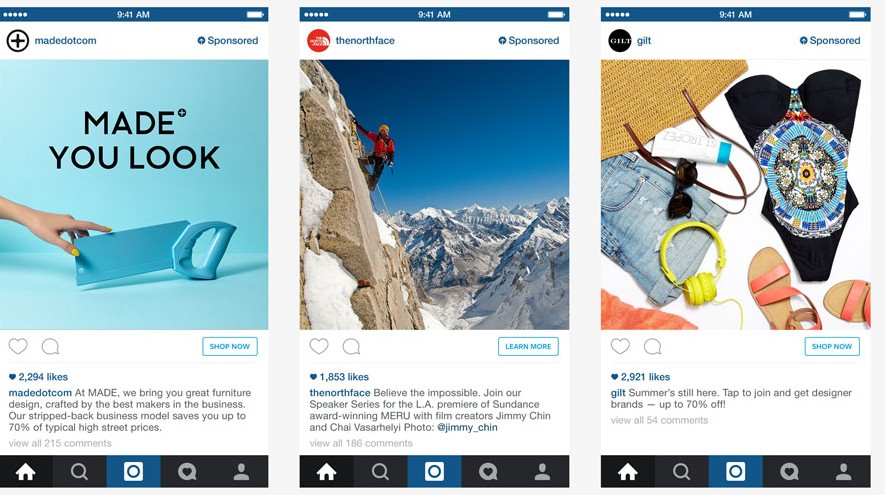
Image reference
Instagram advertisement: Image reference - https://thedigiterati.com/the-partys-over-instagram-ads-are-essential-for-2016/

Products are also adapted across media platforms by the use of billboards. The use of billboards link to social media advertisement because the same persuasive language is used, the same colour schemes, same hashtags and so on. This makes a product adapt and become bigger and more successful because all of the advertisement for the one product links together and allows individuals across all media platforms to view them. At the same time as just billboards and social media linking together, radio advertisement can also come into play. Radio advertisement must use persuasive language to ensure that it can make the radio ad to stand out and actually make an individual want to stop and listen to it. Billboards are extremely successful when helping a product to adapt because they are so big and bright and can target a wide range audience. Billboard helps sales to increase and allows new customers to get involved in the product. There are also disadvantages such as not targeting a specific target audience. Also if people are driving past a billboard they may not be able to stop and view the billboard properly.


Billboard advertisement image references:
http://www.adweek.com/creativity/netflix-is-a-joke-billboards-in-new-york-and-l-a-are-of-course-ads-for-netflix/
https://www.boredpanda.com/creative-billboard-ads/
Radio advertisement also have many pros and cons to helping a product to adapt. There are so many different radio stations that target towards different audiences. For example, Capital FM target towards a younger audience because they are known for playing the top 40 charts. Adverts that are played on capital are likely to target towards teenagers and middle ages and young people. Radio adverts are also produced quickly rather than taking a long time to produce a video advert. A con of using a radio advert could be bad because individuals may not actually be listening and paying attention to what is being said about the product.
How is a brand created across different products and platforms?
One of the best ways that a brand is created across products and platforms is by one of the biggest platforms in society today. Social media is the hugest media platform that is so successful when it comes to helping to create a brand, helping a brand and its products become popular, and helping a brand sell its products. The reason in which social media is so successful is because there are millions of active users every second of the day, allowing individuals to be able to view new products from brands. Social media gives a target audience an opportunity to view different types of advertisement for products that are being sold.
Brands are created across different platforms because advertising company choose many different types of media platforms. For example, share a coke was created across media platforms by the use of social media, billboards and video advertisements. All of this together allows a brand to come together to create a successful product allowing the target audience to view the adverts and then buy the product that may be being sold. This is extremely successful and it allows large amounts of people to view the advert at the same time which helps to increase the amount of sales that the brand has. The fact that all of these different media platforms come together to help create a brand is what allows a brand to become popular and successful.
How do they engage different target audiences?
Media products that are created by advertising companies engage all different types of target audiences by ensuring that the product is created in specific ways and includes certain things. For example, the share a coke campaign is a neutral colour and is also the colour of their brand. The video ad for this campaign includes actors of all different ages, genders and races. This gives off a vibe that they want to aim their product at a wide range target audience and want to target towards many different demographics.
Different media platforms target towards different audiences. Social media is one of the biggest media platforms today and has an extremely wide range of demographics that use social media. Social media users could vary from ages 10-50+. Social media is extremely successful when engaging in audience. This is because for example, Facebook has thousands of different videos and adverts that are advertising all different products with different target audiences. This allows everyone to view everything that is being shared which helps to engage with large target audiences. Depending on what social media is being used they engage with audiences in different ways. Another example would be Instagram. Instagram advertise products through images and videos. This is extremely engaging and is successful when trying to bring a target audience into buying or even jusy watching the advert of a product.
Campaign 1: 'Share a coke' 2014 Campaign -
When this campaign was made during 2014, Coca-cola decided to swap their famous logo with peoples names. This was to represent the idea of 'share a coke' with the people who matter most to you. Coca cola decided to choose the most popular names in the UK and printed them onto the labels and stuck them across bottles and was sold all around the UK.The idea of sharing with people that mean the most to you went down extremely well in the UK and quickly became one of the most popular and successful campaigns.
 Images referenced by Coca-colas own brand and the official share a coke campaign. http://coca-cola.co.uk
Aims and objectives -

Coca colas mains objective was to get people talking about coke again. The campaign helped people to see coke in a positive way so that would also help them to encourage the product as well as loving the brand itself. Another aim of the campaign was just to increase the number of bottles that they sold during the summer in Australia.
Images reference - http://coca-cola.co.uk
Even though the brand Coke wasn't bringing a new brand onto the market as the liquid inside was still the same. The way that the company was marketing their brand was new and very exciting for customers to see. It made people want to buy the product for the sake of having their name on a bottle of Coke. This helped the company to also massively increase the number of sales.
The point in the names being written on the bottle is to remind different individuals of people that they may not speak to anymore because they lost touch with the individual. The names are there to remind them that they may need to meet with these people.
The primary idea of this campaign was originally to get Australians to notice and get excited about coke. The secondary idea was to get people genuinely talking about coke again and feel as though they were part of the brand.Coca-cola doesn't want their products to just be a normal drink to stop people being thirsty, they want to create an emotional bond between the drink and the target audience. There were over a thousand different names written on the coke bottles to try and gain as many new people as possible.
Coca-cola had a creative strategy. This strategy was to try and reconnect with teenagers and young adults. To achieve this strategy they had to design their brand awareness campaigns and any billboards in a special way that will help to catch their attention and will stimulate them to want to get involved. The brand did a lot of research to carry this out and then when marketing and developing the campaign they found a person who was searching for a Bruno mars song on youtube so that they could 'share a coke' with him.
Share a coke then became popular in the UK after releasing 150 bottles with names on them in April 2013. They sent a few to celebrities as gifts and then put the rest of them in stores for people to buy. This was then all published all over social media.
Target audience -
Many adults that were living in Australia around the time of the "Share a coke' came out, around 50% of adults that were living there had never tried coke. This means that the campaign had to rely on putting the campaign all over Facebook and Twitter to ensure that as many people as possible could see it. This also helped to pass the message around social media.
Coca cola mainly aimed their campaign at people who had never tried coke or those that haven't had coke for a long amount of time. They want to have a large target audience however they mainly want to appeal to 24 year olds who haven't had coke for over a year. Because they target such a wide range audience they also want young adults and teenagers to also get involved and buy there products.
Key messages -
Coke created this campaign to help the company gain even more new customers and to try and connect with old customers. 'Share a coke' campaign as a whole want to take their global brand become more personal to individuals within their target audience. This gives them a good opportunity to share a personalised coke with a friend or someone they may love. As much as the company wanted to connect with customers on an emotional level, they also wanted their product to be as popular as possible and to sale as many bottles of coke as possible. Over the years the campaign spread to over 70 different countries which includes the US.
- Coca cola wanted to raise social interaction
- They wanted to make people feel as if they were part of the brand
- They want to earn money
- They wanted to get their customers emotionally attached
- They wanted to get their message and products across the globe
Cokes main approach is to help people to come together. "Nothing reminds you more of someone than their first name". This quote is what Coca cola believes which is why they decided to print over 150 of the most popular names on bottles and then invited a load of Australian people to 'share a coke'. This helps many individuals to become more together along with a great way to start the conversation, your first name.
Representation -
Coca-cola wanted represent their company by bringing these named bottles out, making them well known especially on social media. After just six months of the product being realised there was over 998 million impressions and 235,000 tweets that were written from 111,000 fans that all used the #Shareacoke a hashtag. This helped the company to become even more popular and well known.
The actors that are in the Share a coke UK video there is a mix of different demographics. demographics consist of age, gender, race and ethnicity, religion and spending power. For example, there are young adults within the video that are male and female that are from diverse backgrounds.
These actors can easily represent part of the campaign because they help to represent the consumer because its targeting all different of types of people.
Campaign logistics -
The budget for the 'Share a coke' campaign was $3.3 billion in 2013. The aim of the campaign was not to permanently change the coke bottles however they were so popular they carried it out for a long amount of time. Coca cola as a company before this campaign were not doing as well with their sales. Once this campaign was released the sales rise for the first time in around a decade.
The logistics of the campaign was extremely clever by starting it and then spreading it around to over 70 different countries. They did this through the use of social media which is the biggest platform to target millions of people. They also created the hashtag which helped it spread around twitter extremely quickly and become viral. The campaign began in Australia which was where the advertising company started off. In 2017 the campaign then returned to the United State with a wide variety of holiday locations. Bottles were then started to be labelled with these favourite holiday locations such as Ibiza, Barbados and Hawaii.
The logistics of the campaign are extremely high because it is a high budget production. For example, when creating labels for all of the coke bottles, labels couldn't not just be printed in one big batch. This is because many different names had to be printed on the labels of the bottles. This meant that the price of the labels are going to increase and the budget is going to be a lot higher. As well as the labels making the campaign production more expensive, the video advert is also high budget. This is because it needed a lot of time and investment to make it a successful video advert. For example, paying for rent of the location, paying for actors and so on all increase the logistics of the campaign.
As well as all of the above increasing the logistics, filming the video itself using all specialist equipment and having too advertise the campaign all over social media websites such as Facebook and Instagram also cost money. Even though in the long run it will help the company to increase sales and make more money it still makes the logistics of the campaign more important.
Choice of media -
The 'share a coke' campaign used many types of social media to ensure that the campaign became popular around the globe. Twitter was one of the main social media sites that they used. This is because they created the hashtag that helped the campaign to become viral. Below is a picture of #shareacoke on twitter. The tweets show individuals stating that they finally found a bottle with their name on it.

Twitter.co.uk (image reference)
As well as using twitter, they also use you tube by publishing their campaign video. The video was also published all over television on adverts. This helps all different types of people to listen and get to know the campaign and gets individuals to want to go and 'Share a coke' with a friend.
Call to action -
Coca cola made this campaign because they want people to be able to buy the product as well as enjoy it. They want their target audience to become regular customers that constantly buy their products to raise their sale intake as well as get individuals emotionally attached to Coke. The main aim of the campaign 'Share a coke' was to get people to buy the product, enjoy it whilst drinking it and having a conversation with a friend at the same time. This overall will make the target audience become bigger and people will start enjoying Coke more than before the campaign came out.
Relevant legal and ethical issues -
Within the 'Share a coke' video the company made sure that the actors that they hired to be in the video are a from a mixture of different ethnic backgrounds. This ensured that the company are not racist and do not discriminate against people because of their gender, race, age or religion etc.
Another huge factor are the names on the bottles. Coca cola ensured that when this campaign was released in different countries there were suitable names for each different country that the bottles were being sold. For example, in the UK there were British names such as Hannah or Tom. If the bottles were sold in other countries such as India, there would be names that are popular in India on the bottles.
One main ethical issue that many different people had problems was the fact that they couldn't find their own name on a bottle. There were complaints that said 'Share a coke is indeed an awesome innovation' however the man that wrote a complaint on Instagram also said "it is grossly unacceptable that my name, Avalon on your 'share a coke' production plans".
The reason that this is such a serious ethical issue is because it makes an individual left out and not included especially when they have been a regular Coke customer for so many years. When making a campaign Coke should have thought about the other not as popular names when making labels for each bottle.
There are many legal issues that the share a coke must comply to. For example, The data protection act is the piece of legislation that is in place to help protect any data and person information. It says that no information should be kept for longer than necessary. The share a coke campaign tends to keep individuals information by having an online website where people can order a bottle of coke with their own name on it. This means that the information gathered on the website should be kept confidential and only for the amount of time that is needed.
Another legal issue would be identifying people. This means that the company must ensure that anything that is going to be written on coke bottles must ensure that they are not offensive. For example, if an individual wrote a word such as 'GAY' to put on their bottle. The website would come up with a popup that will read something along the lines of "oops lets pretend you didn't say that".

buy.shareacoke (image reference)
Regulatory Bodies -
The ASA is the Advertising Standards Authority is the regulatory body that helps to regulate all advertisement across the UK. In 2013, Coca cola was banned by the ASA after they believed that the advert misled viewers into thinking that the 139 calories that is in a can of coke can be immediately burned off by specific activities such as walking, dancing and bowling. Certain people believed that this ad was misleading and unfair information that was being shared.
To conclude, there are so many different ways that i have outlined above that the campaign 'share a coke' advertises and markets different ways in different media forms. The share a coke campaign use cross media and many different marketing ways to advertise their products and to make them extremely popular and successful.
2. Evaluates different cross media advertising campaigns for consistency of message, looking at the message delivery across the different media forms. (U20:M1)
Coca cola use many different media platforms to advertise there products and campaigns. The 'Share a coke' campaign had many different aspects as to why it became so popular so quickly. They started off with a video that showed a range of different individuals sharing a coke with friends. The video became popular very quickly as it showed a range of different people that were enjoying each others company and at the same time sharing a coke. This could make viewers want to do the same thing and buy a bottle that has their name on it and share a coke with a friend.
How is the message of this campaign made consistent across all media products?
When creating a media campaign it is crucial that the same message is put across all products that are created to the target audience. This is to ensure that the product is giving a clear communication of exactly what the message of the product is. For example, in the share a coke campaign they want to put the message across of sharing a coke with a friend so that everyone can come together. It is so important that the billboard and video ads are linking together to promote and sell the same product. They also should link and the message should be made consistent throughout all of the media products to ensure that the same message is being put across towards the target audience.
It is extremely important that in advertisement and campaigns a message is made consistent. This is to ensure that audiences can really understand what the advert is advertising and promoting and can really understand the message behind the product. It also allows audiences to really start to gain an understanding of the product that is being advertised.

http://www.flickriver.com/photos/ell-r-brown/8845268013/
They also had many different billboards that were bright red with a different name on the billboard. They did this so that it looked like the bottles that they were selling with all different names on it. As well as having billboards with names on it, they also had bill boards that had an image of a bottle of coke with a name on it and also had
 there quote "share a coke with".
Image reference - https://www.coca-colacompany.com/stories/share-a-coke-how-the-groundbreaking-campaign-got-its-start-down-under
As well as the billboard and the video they also created a hashtag that went viral all over twitter '#shareacoke'. This gave the campaign extreme amounts of popularity and a whole load of new customers as well as old ones that kept buying the products.
The bill board increased the popularity as the colour scheme is well known to be coke. This increase the amount of sales that they took and also made their customers become emotionally attached and extremely happy whilst drinking coke.
Coca cola used a lot cross media. This is because they wanted to get their campaign out to the public in as many different ways as possible. The way that Coca-Cola has decided to use cross-media worked extremely well and all of their different types of advertisement linked together. They used the power of TV, social media and billboards to get their message across to the public. They link extremely well together because they all have the same message and all want to get the campaign across to the public in the same way just in different forms.
3. Describes the media products for the advertising industry, including an assessment of the way in which products are adapted, and institutions create brands and cross-media products across platforms to engage audiences (U24: P1)
The Share a coke campaign made sure that their video, billboard, and hashtag all linked together and were similar but also different in many ways. Each different piece of media that was created by the campaign all gave the campaign different positive outcomes such as the hashtag bringing in the younger part of the target audience and the billboard bringing in the older part of the target audience. This is because a lot of younger people tend to use social media and the older generation often pay more attention to billboards that they may drive past. All of these factors are good because it makes the target audience larger and helps the campaign to become more popular and the company to help sell more products.
Coke has created their brand by creating their own 'one brand' strategy. This means that all of their products even though are called different things they are all under one brand. For example, Coca-Cola, Diet coke and Coca-Cola zero are all marketed under the one named brand 'Coca-Cola'. Thi strategy is very beneficial because it allows each different product to have their own name, style and taste and also helps the brand to range when it comes to calories. Each drink is a different amount of calories which means more people are likely to buy the products.
Coca-Cola have created their brand in a way that has made it extremely popular. They have done this through the use of advertisement mainly. Coke is known and is usually spotted because their brand is known to be red. The colour of the brand is an extremely important factor as it is eye catching and bold. Another huge factor is the font of the brand name. Coca cola's brand font is a curly white writing with a long white curled line underneath. This is good because it is an easy font and style too remember. Coke also use many different images which helps them to advertise they're products by showing the audience exactly what they are going to receive when advertising their products. For example, including a picture of the bottle of coke with a name on it on a billboard helps the audience to really visualize what they are going to get when buying the coke bottle and what the campaign is really about when sharing a coke with a friend.


http://www.coca-cola.co.uk
Unit 20 P1 - Describe an existing media advertising campaign.
Campaign 2: Dumb Ways to Die (Metro) Campaign

http://www.dumbwaystodie.com
When the campaign was first advertised in Australia, it was found in newspapers, local radios, on social media and even on billboards and outside advertisement such as on the sides of buses and in train stations.
Aims and objectives -
The Dumb ways to die campaign had 4 main objectives that they wanted to gain from publishing and advertising a campaign like this. The main aim of the Dumb ways to die campaign was to get an audience to listen and to understand the important of rail safety. It was also to get an audience that didn't want to hear about road safety to actually listen. Dumb ways to die also wanted to help make bigger the amount of public awareness and engagement that individuals had with rail safety and to generate a good buzz around the video. They also wanted to see less accidents revolving around level crossings and railway stations and platforms. The fourth aim was to invite a commitment, which was for everyone to be safe.
By having these 4 main objectives in place it gave the company a rough idea as to how successful the campaign would have been. There was a 20% drop of "dumb behaviours" revolving around railway stations, platforms and level crossings within the two months of the video being out.
Target audience -
The dumb ways to die campaign was targeted towards really as many people as possible. Usually when safety videos are made they are extremely serious and are boring or shocking to watch so therefore people do not pay much attention to them. The dumb ways to die campaign decided to make their safety video a lot more fun and entertaining to watch as well as entertaining. The way that dumb ways to die was advertised was mainly through the use of social media and by playing the dumb ways to die game via smartphones. This means that a wide variety of the target audience are likely to be a younger generation, especially as the campaign video is all cartoon as well. The campaign video was extremely funny and entertaining which brought all different kind of people into watching it not just the younger generation.
Their primary target audience would definitely be the younger generation because they are the group that are most likely to watch the video on you tube, listen to the song on iTunes and play on the app as it is a fun and engaging way to know about rail safety. The app which is used by the smart phone is typically used by the younger generation more than the older generation which is why the dumb ways to die primary target audience pays more attention to the younger demographic. Later on a dumb ways to die reading book was also released. The book included simple cartoon images of characters dying in dumb ways. Again the release of the book was to bring in more young people and to get them to read the book and to teach themselves to understand the importance of railway safety.
The secondary target audience would be young adults. This is because he smart phone ownership is mainly ruled by young adults. This age group is likely to vary from 18-30 year olds. This proves that if a company wants their main target audience to be a younger generation then the product has to somehow include a smart phone as it is an essential part of a young person/adults every day life.
Key messages -
The dumb ways to die had one main key message. This was to get across to the target audience how important rail safety is. They created the dumb ways to die song which had catchy lyrics and great animations that really helped Metro to get their message across to the public. The video also wanted to show children the importance of rail safety in an appropriate way rather than showing them shocking or disturbing types of videos. Metro took a subject that is most of the time boring to listen to and completely changed it around into an engaging subject that became fun or children to listen to and at the same time very educational.
Approach -
The dumb ways to die campaigns main approach was to get a message about railway safety across to the audience in a way that isn't boring and a way that people will actually listen. They wanted to get through to people, mainly the younger generation in a positive way that can amuse them at the same time as educating them of the importance of rail safety.
Representation -
The campaign is represented through the use of cartoon characters. This gave the campaign a fun tone to it which contrasts the idea of it rail safety being so important. They did this because they wanted to make a serious issue easier to listen to. Metro chose to write a song with interesting lyrics to help get the message across to the younger parts of the audience by getting them to sing a long and find the video extremely amusing.
The fact that the video is extremely colourful as well really makes the campaign stand out. Metro wanted to create a campaign that was bright, bubbly and amusing for a topic that are all of the opposite things. This is why the campaign worked extremely well and the message really got across to the audience.
Campaign logistics -
The campaign for Dumb ways to die originally was made in Australia. The logistics of the campaign became so big it went global and spread round different many countries. Dumb ways to die was so popular is was put in magazines, newspapers, on the radio, billboards and throughout Metro train networks. The idea of 'dumb ways to die' became so big and popular as well as the video they also created a game as an app for the younger audience to play. There was also a sequel of the game as dumb ways to die 2. Within two weeks of the campaign being released they made $50 million on global media. The campaign was such a success there was a 30% reduction in accidents and near accidents.
 - Google images (Dumb ways to die - image reference)
Choice of media -
Dumb ways to die was advertised everywhere including many types of social media. The video link was globally published and was on you tube. Once the video campaign was put on you tube it got popular extremely quickly and then was shared onto face book and twitter gaining lots of different feed back. There was also a twitter '#dumbwaystodie'. This made the campaign extremely more popular and helped the campaign to spread even more.
As well as twitter being used, the video was also shared onto face book, and for all IOS and android users the game was available to use, which again gave the campaign a lot more viewers and increased the size of their audience. Dumb ways to die was also written about in newspapers and magazines which informed the older generation that may not use as much social media as the younger audience do.
Call to action -
This campaign was created for one reason and that is to get a message across to their target audience and to help people gain some knowledge of railway safety. They wanted to help get their audience to be more aware and safe of the serious things that can happen when around railway stations and trains. Having the campaign being put around all different types of social media as well being published on billboards and within train stations it will really broaden their target audience and make their campaigns have more viewers.
Relevant legal and ethical issues -
The campaign of dumb ways to die video and games were banned in Russia. This is because a lot of people thought that the lyrics of the song were extremely misleading and gave lots of people ideas on ways to commit suicide. They thought that it influenced young Russian people to commit suicide.
The campaign was successful overall and through the use of music and cartoon it gave younger people an extremely good way to send a message like rail way safety.
Regulatory bodies -
The ASA is the Advertising Standards Authority is the regulatory body that helps to regulate all advertisement across the UK. The dumb ways to die video had nearly 659,000 shares and was one of the most shared video within those 24 hours. The ASA had no problems regarding the dumb ways to die as they thought it was a beneficial way to get the message across regarding railway safety.
2. Evaluates different cross media advertising campaigns for consistency of message, looking at the message delivery across the different media forms. (U20:M1)

(Google images) - dumb ways to die - http://www.andrewpcarson.com/-blog/2013/6/28/dumb-ways-to-die-viral-safety-campaign
http://dumbway2sdie.wikia.com/wiki/Dumbwaystodie.com - image reference
The bill board increased the popularity as the colour scheme is extremely bright and the cartoons are known to be from dumb ways to die. This increased the amount of views that they had and also made their customers become attached and extremely happy and educated whilst watching dumb ways to die.
Dumb ways to die had many different billboards tar were extremely bright with many different colours and big images of characters from the video. Metro decided to design their billboards like this so that they are eye catching and so that everyone knows that dumb ways to die is what is being advertised. As well as the billboard and the video they also created a hashtag that went viral over twitter '#dumbwaystodie'. This gave the campaign extreme amounts of popularity and a whole load of new viewers that helped the campaign to become a lot more popular.
Dumb ways to die most popular piece of advertisement is their video ad. This was one of the most successful videos within a campaign and allows lots of young individuals to find the video extremely amusing. From creating a music and having its own dumb ways to die song it created a strong brand identity and allowed the brand to expand and then create their own apps which were used by young individuals to play the dumb ways to die game. The video was extremely popular and successful when advertising and promoting railway safety but at the same time hooked audiences onto wanting to watch the video more than once and eventually catch on and be singing the song.
Dumb ways to die creates a billboard, video and radio adverts. All of these are extremely successful and allows many different individuals to view the adverts in different ways. For example, younger individuals are likely to watch the video through social media platforms and the older audiences may be getting on the train and stop to look at billboard adverts. Having different advertisement through different media platforms allows a wide range of people to view the advert and understand what Dumb ways to die are really trying to put across to their target audiences.
In all of the adverts that were created by dumb ways to die, each and everyone of them have their own aspects that will make individuals want to stop and look or watch it. For example, Billboards that are in the train stations are extremely bright and eye-catching which will allows individuals to stop and look at them. The video is successful because of how catchy the song is and how successful and popular the song has become.
This is the video advert that was created for the dumb ways to die campaign. This video went viral and was extremely successful with young individuals that watched and listened to the song. The video was so successful in then got created into an app that young people could play the dumb ways to die app. The app was mostly played by young people. The game is to try and save the characters without allowing them to die in a dumb way. This gave young people an extreme rush of excitement and advertisement was becoming so successful for this campaign.

3. Describes the media products for the advertising industry, including an assessment of the way in which products are adapted, and institutions create brands and cross-media products across platforms to engage audiences (U24: P1)
The Dumb ways to die campaign made sure that their video, billboard, and hashtag all linked together and were similar but also different in many ways. Each different piece of media that was created by the campaign all gave the campaign different positive outcomes such as the hashtag bringing in the young adults part of the target audience and the billboard and articles that were written about the campaign in newspapers and magazines bringing in the older part of the target audience. This is because a lot of younger people tend to use social media and the older generation often pay more attention to billboards that they may drive past and read newspapers and magazines. All of these factors are good because it makes the target audience larger and helps the campaign to become more popular and the company to help sell more products.
Metro had a specific strategy when creating and designing their billboards and video. They ensured that everything was bright and colourful and that there were always characters included within the advertisement. This was to ensure that people remembered the campaign by the images of the characters. It is extremely memorable when advertisement uses a lot of colour, images and even through remembering the lyrics of the song.
Metro have created a campaign in a way that has made it extremely popular. They have done this through the use of advertisement mainly. Dumb ways to die is known and is usually spotted because Metro has created the campaign to be known as bright colourful and full of cartoon characters. The colours that Metro chose for the campaign is an extremely important factor as they are eye catching and bold. Another huge factor is the font of the campaign. The dumb ways to die campaign is all bright colours that are extremely eye catching. They use many different advertising techniques such as images, fonts, colour schemes and so on to help create a bigger target audience and to get their campaign as many viewers as possible.


Made changes and updated P1
ReplyDelete